
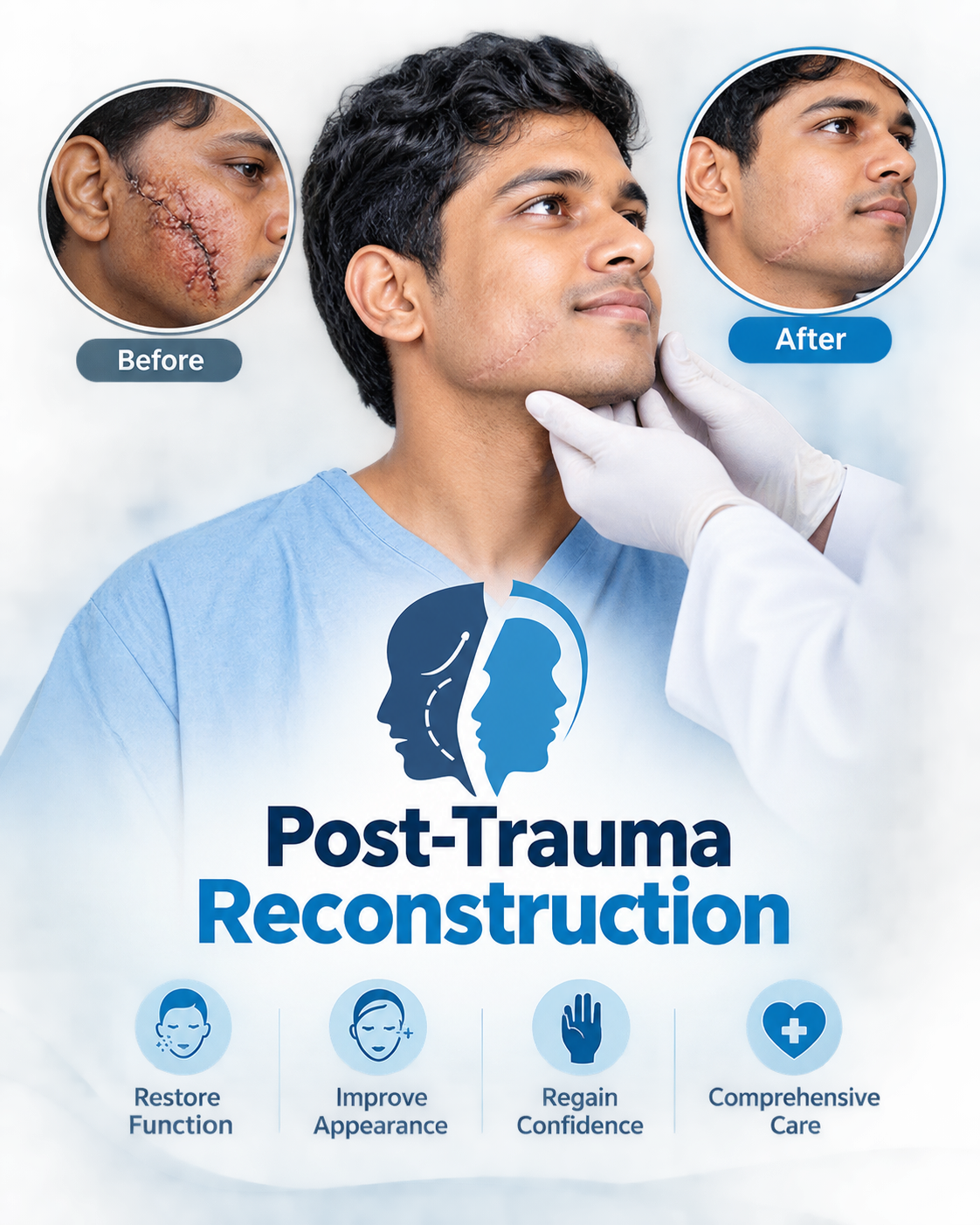
Post-Trauma Reconstruction
Advanced Reconstruction to Restore Form, Function, and Soft Tissue Coverage After Severe Injury
Post-Trauma Reconstruction is a specialised reconstructive approach for restoring damaged skin, soft tissue, muscles, tendons, nerves, bones, and other structures following traumatic injuries. It may be required after road traffic accidents, workplace injuries, crush injuries, burns, or complex wounds. Treatment focuses on achieving stable wound coverage, preserving function, and supporting long-term recovery.
Post-Trauma Reconstruction Procedures
- Soft Tissue Reconstruction – Restoration of damaged or missing skin, subcutaneous tissue, fascia, and muscle following severe trauma.
- Skin Grafting – Coverage of suitable wounds using healthy skin from another part of the body.
- Local Flap Reconstruction – Use of nearby healthy tissue to cover wounds while maintaining its blood supply.
- Regional Flap Reconstruction – Transfer of tissue from a nearby region to reconstruct larger or deeper defects.
- Free Flap Reconstruction – Microsurgical transfer of tissue with reconnection of its blood vessels to reconstruct extensive defects.
- Tendon Reconstruction – Repair or reconstruction of damaged tendons to help restore movement and function.
- Nerve Reconstruction – Repair or reconstruction of injured nerves to support recovery of sensation and motor function.
- Bone & Joint Coverage – Soft tissue reconstruction to protect exposed bones, joints, and other deep structures.
- Scar & Contracture Reconstruction – Correction of restrictive scars and contractures that interfere with movement or function.
- Limb Salvage Reconstruction – Advanced reconstruction aimed at preserving an injured limb when significant tissue damage has occurred.
- Complex Wound Reconstruction – Management of extensive traumatic wounds involving multiple layers of tissue.
Common Causes
- Road traffic accidents
- Industrial and workplace accidents
- Machinery-related injuries
- Crush injuries
- Severe lacerations
- Traumatic amputations
- Burns
- Open fractures
- Animal bites
- Complex soft tissue injuries
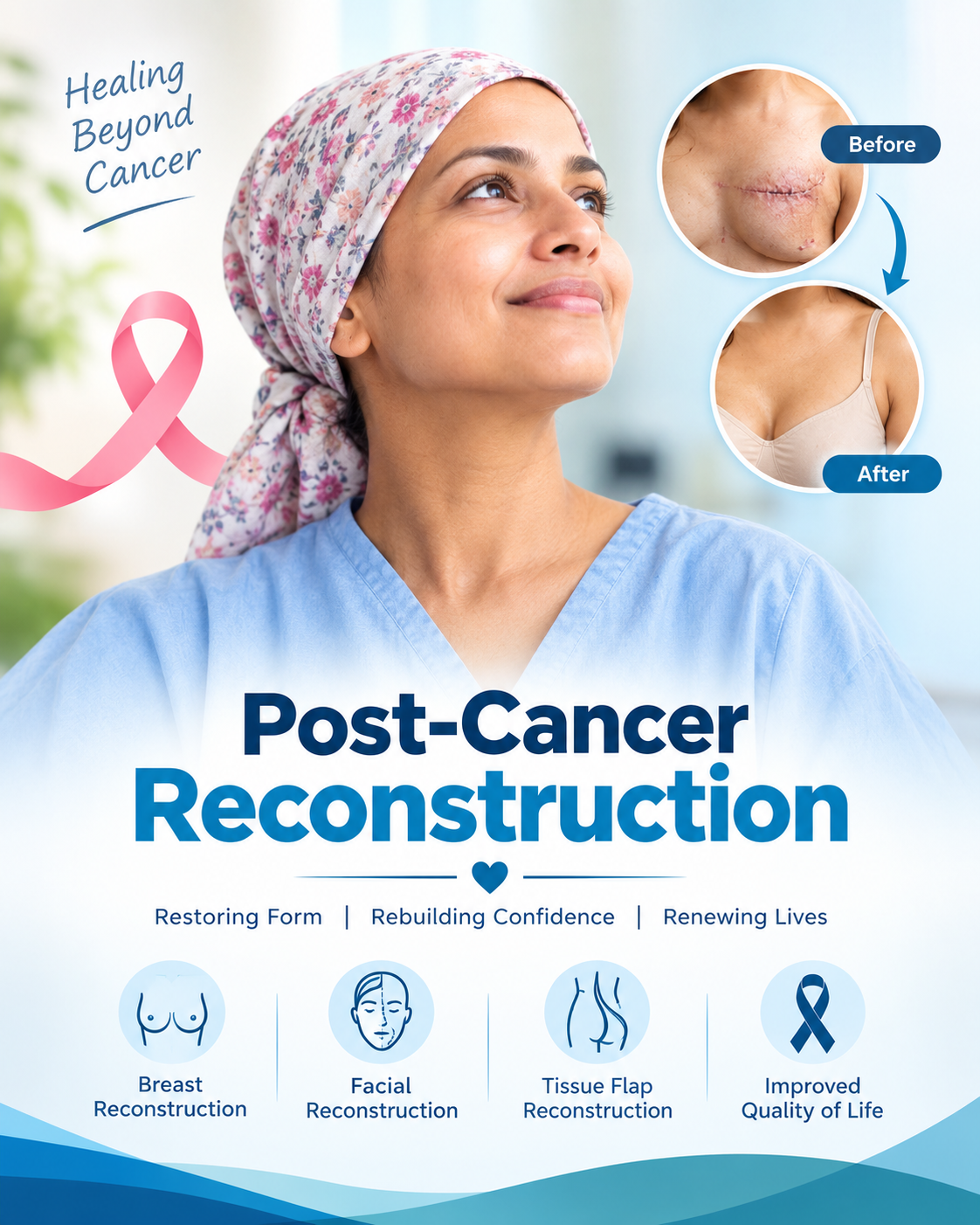
Post-Cancer Reconstruction
Advanced Reconstruction to Restore Form, Function, and Tissue Coverage After Cancer Surgery
Post-Cancer Reconstruction is a specialised reconstructive approach used to restore areas of the body affected by cancer removal surgery and resulting tissue loss. Cancer treatment may require removal of skin, soft tissue, muscle, or other structures, creating defects that can affect appearance, movement, and function. Reconstructive surgery aims to provide durable tissue coverage and, where possible, restore the form and function of the affected area.
Post-Cancer Reconstruction Procedures
- Soft Tissue Reconstruction – Restoration of skin, subcutaneous tissue, fascia, and muscle following removal of cancerous tissue.
- Skin Grafting – Coverage of suitable surgical defects using healthy skin from another part of the body.
- Local Flap Reconstruction – Use of nearby healthy tissue to cover and reconstruct smaller or moderate defects.
- Regional Flap Reconstruction – Transfer of tissue from a nearby anatomical region for larger or deeper defects.
- Free Flap Reconstruction – Microsurgical transfer of tissue from another part of the body with reconnection of blood vessels at the reconstruction site.
- Head & Neck Reconstruction – Reconstruction of tissue defects following selected cancers of the face, mouth, neck, or related areas.
- Breast Reconstruction – Restoration of breast shape and volume following breast cancer surgery when appropriate.
- Scar & Contracture Revision – Correction of restrictive or problematic scars that affect appearance or movement.
- Functional Reconstruction – Restoration of movement, tissue protection, and other functions affected by cancer surgery.
- Complex Defect Reconstruction – Advanced reconstruction of extensive tissue defects following major cancer excision.
Common Causes
- Skin cancer removal
- Head and neck cancer surgery
- Breast cancer surgery
- Soft tissue tumour removal
- Oral and facial cancer surgery
- Large tumour excision
- Recurrent cancer surgery
- Post-radiation tissue damage
- Extensive surgical tissue loss
When Is Post-Cancer Reconstruction Considered?
Reconstructive surgery may be considered when cancer treatment results in significant tissue loss, functional impairment, exposed deeper structures, or a defect that cannot be adequately managed with simple closure.
Reconstruction may be performed at the time of cancer surgery (immediate reconstruction) or at a later stage (delayed reconstruction), depending on the cancer treatment plan and the patient’s individual circumstances.
The treatment plan depends on:
- Type and location of cancer
- Extent of tissue removed
- Condition of the surrounding tissues
- Previous radiation or other cancer treatments
- Size and depth of the surgical defect
- Involvement of important structures
- Functional and aesthetic requirements
- Overall health and healing capacity of the patient
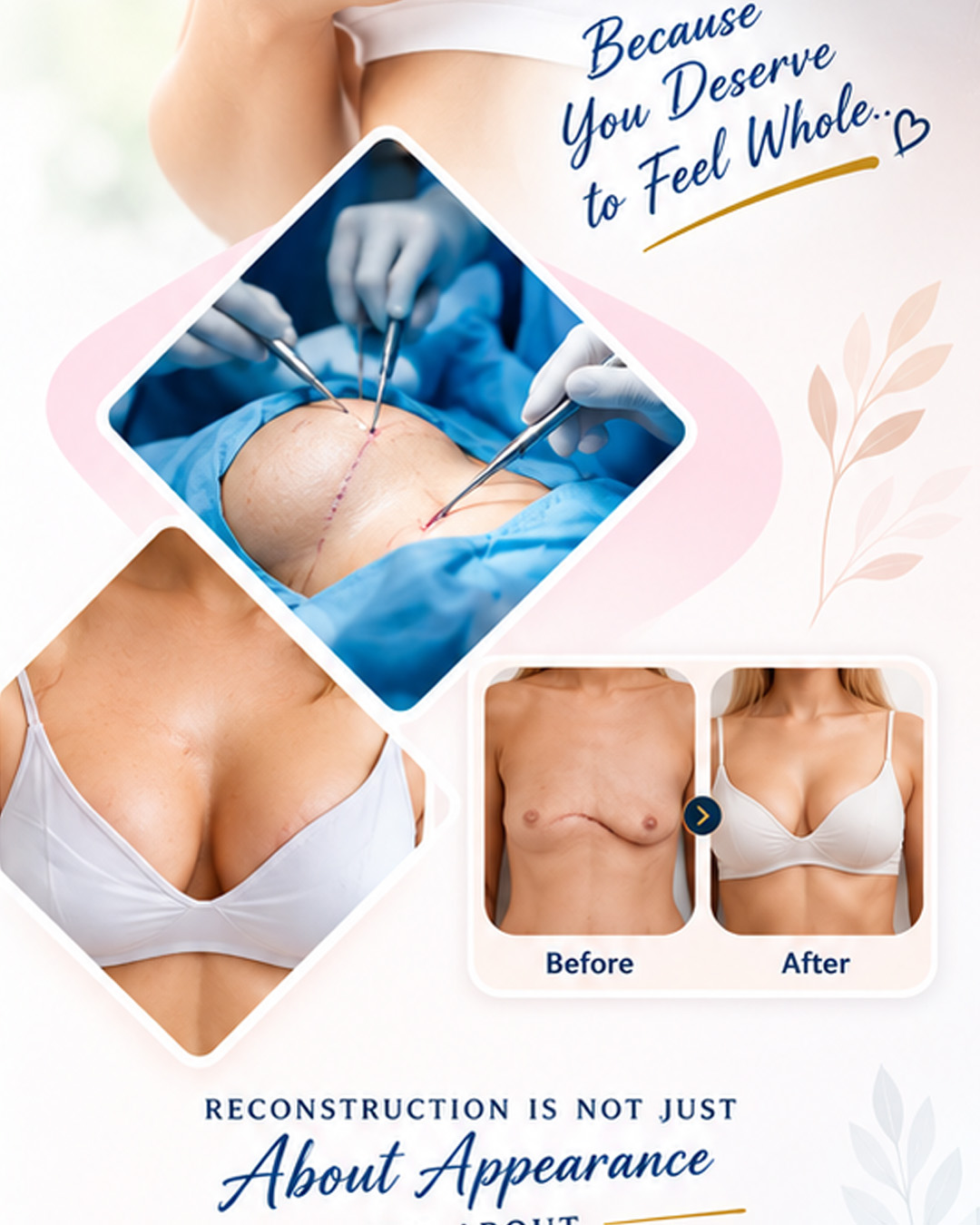
Breast Reconstruction
Specialised Reconstruction to Restore Breast Shape and Symmetry After Cancer Surgery
Breast Reconstruction is a specialised surgical procedure performed to restore the shape, volume, and appearance of the breast following mastectomy, breast-conserving surgery, trauma, or significant breast tissue loss. Reconstruction can be performed using implants, the patient’s own tissue, or a combination of techniques, depending on individual requirements and the previous cancer treatment.
Breast Reconstruction Procedures
- Implant-Based Reconstruction – Restoration of breast volume using a breast implant in suitable patients.
- Tissue Expander Reconstruction – Gradual expansion of the breast skin to prepare for placement of a permanent implant.
- Autologous Tissue Reconstruction – Reconstruction using the patient’s own tissue harvested from another part of the body.
- Local Tissue Reconstruction – Use of available breast or surrounding tissue to restore the breast contour.
- Flap Reconstruction – Transfer of skin and soft tissue from another area to reconstruct the breast.
- Free Flap Reconstruction – Microsurgical transfer of tissue with reconnection of blood vessels to create a new breast mound.
- Breast Symmetry Procedures – Procedures on the opposite breast, when appropriate, to improve size and symmetry.
- Nipple & Areola Reconstruction – Reconstruction of the nipple and areola as part of the overall breast restoration process.
- Breast Reconstruction Revision – Correction or refinement of previous reconstruction when contour, symmetry, scarring, or other issues require improvement.
- Post-Radiation Reconstruction – Specialised reconstruction for patients with tissue changes following radiotherapy.
Common Reasons for Breast Reconstruction
- Following mastectomy for breast cancer
- Following breast-conserving cancer surgery
- Significant breast tissue loss
- Post-cancer deformity
- Post-radiation tissue changes
- Trauma-related breast tissue loss
- Previous reconstruction requiring revision
When Is Breast Reconstruction Considered?
Breast reconstruction may be considered immediately during cancer surgery or as a delayed procedure after completion of cancer treatment. The timing and technique depend on the cancer treatment plan, tissue condition, and individual patient factors.
The reconstruction plan depends on:
- Type and extent of cancer surgery
- Amount of breast tissue removed
- Skin and soft tissue availability
- Previous or planned radiotherapy
- Overall health and healing capacity
- Desired breast size and symmetry
- Patient preferences and reconstructive goals
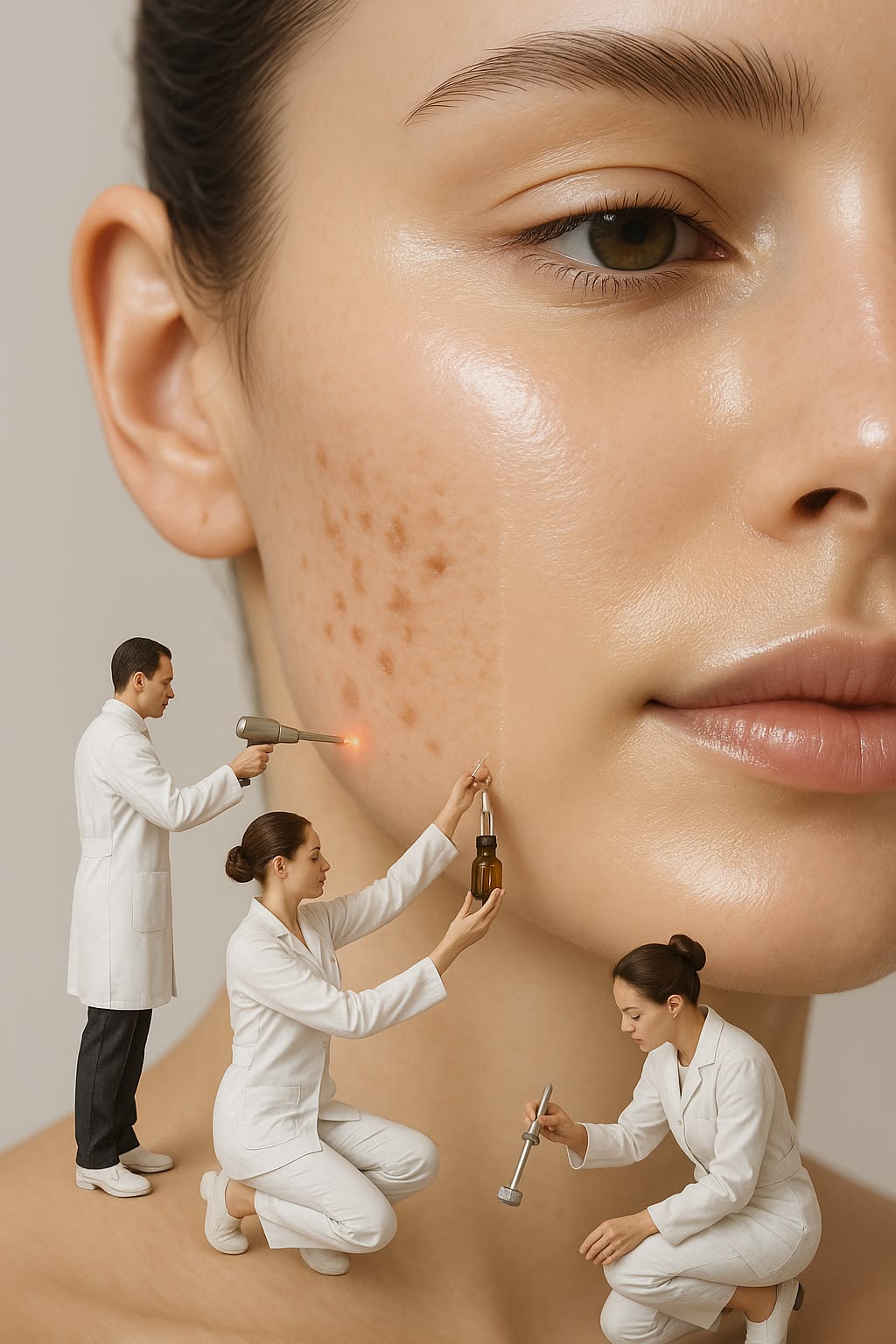
Facial Reconstruction
Advanced Reconstruction to Restore Facial Form, Function, and Appearance
Facial Reconstruction is a specialised surgical approach used to restore damaged, missing, or deformed facial tissues following trauma, cancer surgery, congenital conditions, burns, or other causes of tissue loss. Reconstruction may involve the skin, soft tissue, muscles, nerves, cartilage, or bone, with the goal of restoring both facial function and appearance.
Facial Reconstruction Procedures
- Facial Soft Tissue Reconstruction – Restoration of damaged or missing skin and soft tissue following injury or tissue loss.
- Skin Grafting – Coverage of suitable facial defects using healthy skin from another area of the body.
- Local Flap Reconstruction – Use of nearby healthy facial tissue to achieve appropriate coverage and contour.
- Regional Flap Reconstruction – Transfer of tissue from a nearby anatomical region for larger or deeper facial defects.
- Free Flap Reconstruction – Microsurgical transfer of tissue with reconnection of blood vessels to reconstruct extensive facial defects.
- Facial Scar Revision – Improvement of prominent, irregular, or restrictive scars following trauma or surgery.
- Facial Contracture Release – Correction of tight scar tissue that restricts facial movement or function.
- Nerve Reconstruction – Repair or reconstruction of injured facial nerves to support recovery of facial movement and sensation.
- Facial Bone Reconstruction – Reconstruction of damaged or missing facial bones following severe trauma or tumour removal.
- Nasal Reconstruction – Restoration of the nose following trauma, cancer surgery, or significant tissue loss.
- Lip & Oral Reconstruction – Reconstruction of defects involving the lips, mouth, or surrounding facial tissues.
- Eyelid Reconstruction – Restoration of eyelid tissue to protect the eye and improve function following injury or tumour removal.
Common Causes
- Road traffic accidents
- Facial trauma
- Severe lacerations
- Burns
- Animal bites
- Facial fractures with soft tissue loss
- Skin and facial cancers
- Tumour removal
- Post-surgical tissue defects
- Congenital facial deformities
When Is Facial Reconstruction Considered?
Facial reconstruction may be considered when an injury, cancer treatment, or other condition causes significant tissue loss, facial deformity, functional impairment, or exposed underlying structures.
The reconstruction plan depends on:
- Location and extent of the facial defect
- Type and depth of tissue loss
- Condition of surrounding tissues
- Blood supply to the affected area
- Involvement of nerves, muscles, cartilage, or bone
- Previous surgery or radiation treatment
- Functional and aesthetic requirements
- Overall health and healing capacity of the patient
Limb Reconstruction
Advanced Reconstruction to Restore Limb Coverage, Function, and Mobility After Severe Injury
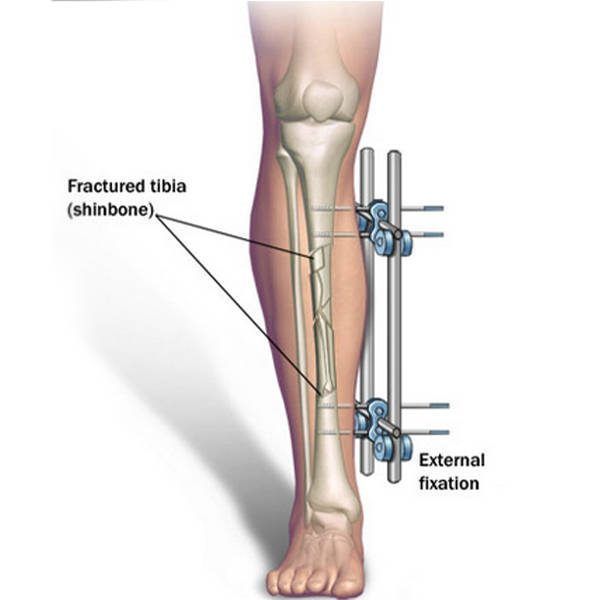
Limb Reconstruction is a specialised surgical approach used to restore damaged or missing skin, soft tissue, muscles, tendons, nerves, and other structures of the upper or lower limbs. It is commonly required after severe trauma, crush injuries, complex fractures, infections, chronic wounds, or significant tissue loss. The goal is to provide stable tissue coverage, preserve the limb where possible, and support functional recovery.
Limb Reconstruction Procedures
- Soft Tissue Reconstruction – Restoration of damaged or missing skin, subcutaneous tissue, fascia, and muscle.
- Skin Grafting – Coverage of suitable limb wounds using healthy skin from another area of the body.
- Local Flap Reconstruction – Use of nearby healthy tissue to cover and protect the wound.
- Regional Flap Reconstruction – Transfer of tissue from a nearby region for larger or deeper defects.
- Free Flap Reconstruction – Microsurgical transfer of tissue with reconnection of blood vessels to reconstruct extensive defects.
- Muscle & Fascia Reconstruction – Restoration of damaged muscle or fascial tissues when required.
- Tendon Reconstruction – Repair or reconstruction of damaged tendons to support movement and function.
- Nerve Reconstruction – Repair or reconstruction of injured nerves to support recovery of sensation and motor function.
- Bone & Joint Coverage – Durable soft tissue coverage for exposed bones, joints, and other deep structures.
- Complex Wound Reconstruction – Advanced management of extensive wounds involving multiple layers of tissue.
- Limb Salvage Reconstruction – Reconstructive treatment aimed at preserving a severely injured limb when possible.
- Scar & Contracture Revision – Correction of restrictive scars that interfere with movement or function.
Common Causes
- Road traffic accidents
- Industrial and workplace injuries
- Crush injuries
- Machinery-related injuries
- Severe lacerations
- Open fractures
- Traumatic amputations
- Infected wounds
- Diabetic foot wounds
- Chronic non-healing wounds
- Severe burns
When Is Limb Reconstruction Considered?
Limb reconstruction may be considered when an injury or disease causes significant tissue loss, exposed bone or tendon, complex wounds, functional impairment, or a risk of limb loss.
The treatment plan depends on:
- Location and extent of tissue damage
- Size and depth of the wound
- Blood supply to the limb
- Presence of infection
- Condition of surrounding tissues
- Involvement of nerves, tendons, bones, or joints
- Functional requirements of the limb
- Overall health and healing capacity of the patient
Soft Tissue Reconstruction
Advanced Restoration of Skin, Fat, Muscle, and Soft Tissue Following Injury, Disease, or Tissue Loss
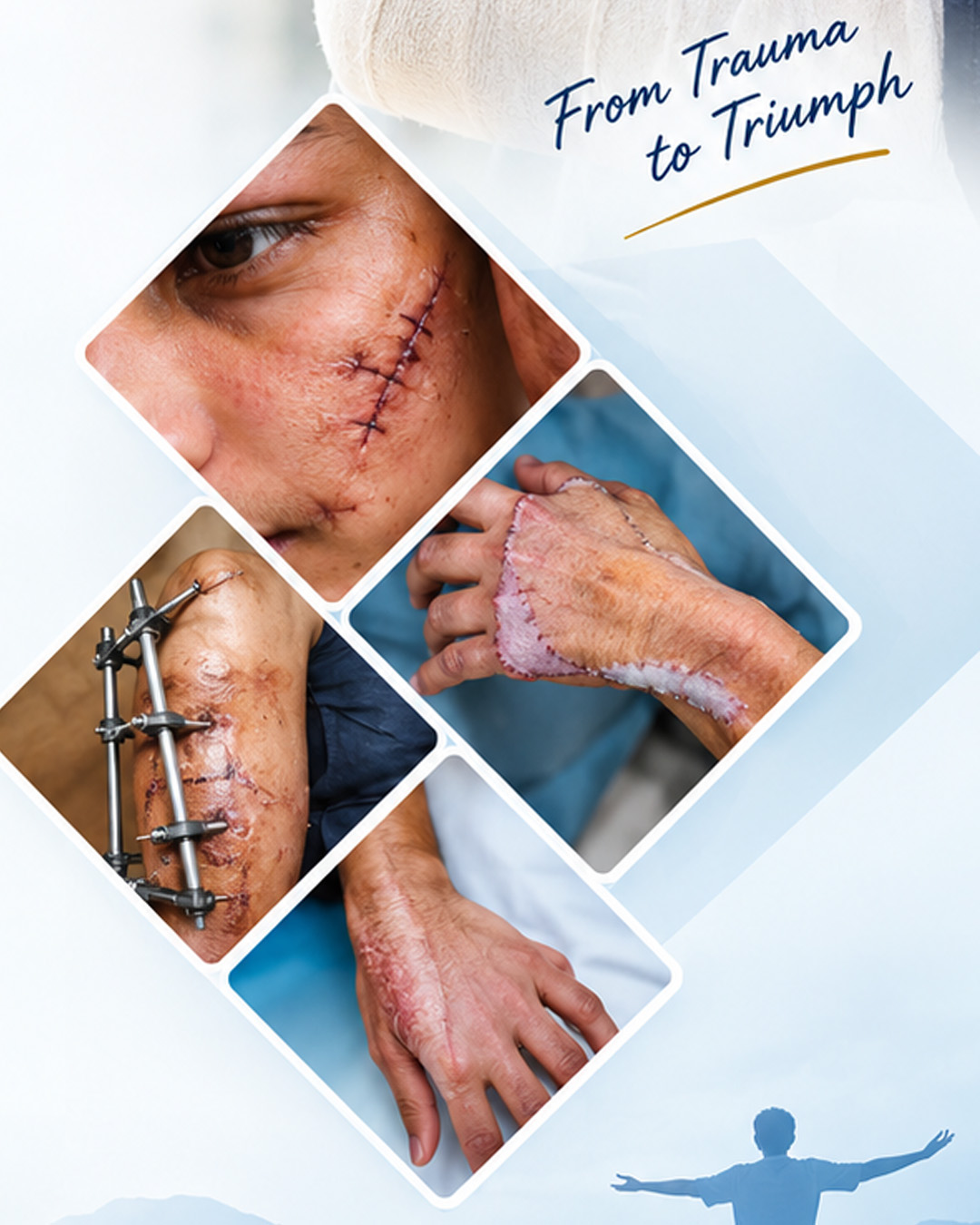
Soft Tissue Reconstruction is a specialised surgical approach used to restore missing or damaged skin, subcutaneous tissue, fascia, and muscle following trauma, infection, cancer surgery, chronic wounds, or other conditions. The aim is to provide durable tissue coverage, protect deeper structures, restore contour, and support functional recovery.
Soft Tissue Reconstruction Procedures
- Skin Grafting – Coverage of suitable wounds using healthy skin harvested from another area of the body.
- Local Flap Reconstruction – Movement of nearby healthy tissue to cover a defect while maintaining its blood supply.
- Regional Flap Reconstruction – Transfer of tissue from a nearby anatomical region for larger or deeper defects.
- Free Flap Reconstruction – Microsurgical transfer of tissue with reconnection of blood vessels to reconstruct extensive defects.
- Fasciocutaneous Flap Reconstruction – Use of skin and underlying fascia to provide durable soft tissue coverage.
- Muscle Flap Reconstruction – Use of healthy muscle tissue to fill deep defects and provide coverage over important structures.
- Fat & Soft Tissue Reconstruction – Restoration of lost soft tissue volume and contour where appropriate.
- Complex Wound Coverage – Reconstruction of wounds with exposed tendon, bone, joint, nerve, or other vital structures.
- Post-Trauma Reconstruction – Restoration of soft tissue following severe accidents, crush injuries, and traumatic tissue loss.
- Post-Cancer Reconstruction – Reconstruction of defects following removal of skin or soft tissue cancers.
- Scar & Contracture Revision – Correction of restrictive or problematic scars that affect appearance or movement.
- Limb Salvage Reconstruction – Advanced soft tissue reconstruction aimed at preserving a severely injured limb when possible.
Common Causes
- Road traffic accidents
- Industrial and workplace injuries
- Crush injuries
- Severe lacerations
- Chronic and non-healing wounds
- Diabetic wounds
- Severe infections
- Burns
- Post-surgical wound complications
- Cancer or tumour removal
- Significant tissue loss
When Is Soft Tissue Reconstruction Considered?
Reconstructive surgery may be considered when a wound causes significant skin or soft tissue loss, cannot be closed safely, exposes deeper structures, or fails to heal with conventional wound care.
The treatment plan depends on:
- Size, depth, and location of the defect
- Type and extent of tissue loss
- Condition of the wound and surrounding tissues
- Blood supply to the affected area
- Presence of infection
- Exposure of tendon, bone, joint, or other structures
- Functional and aesthetic requirements
- Overall health and healing capacity of the patient
Scar Revision
Specialised Treatment to Improve Problematic Scars, Skin Contour, and Function
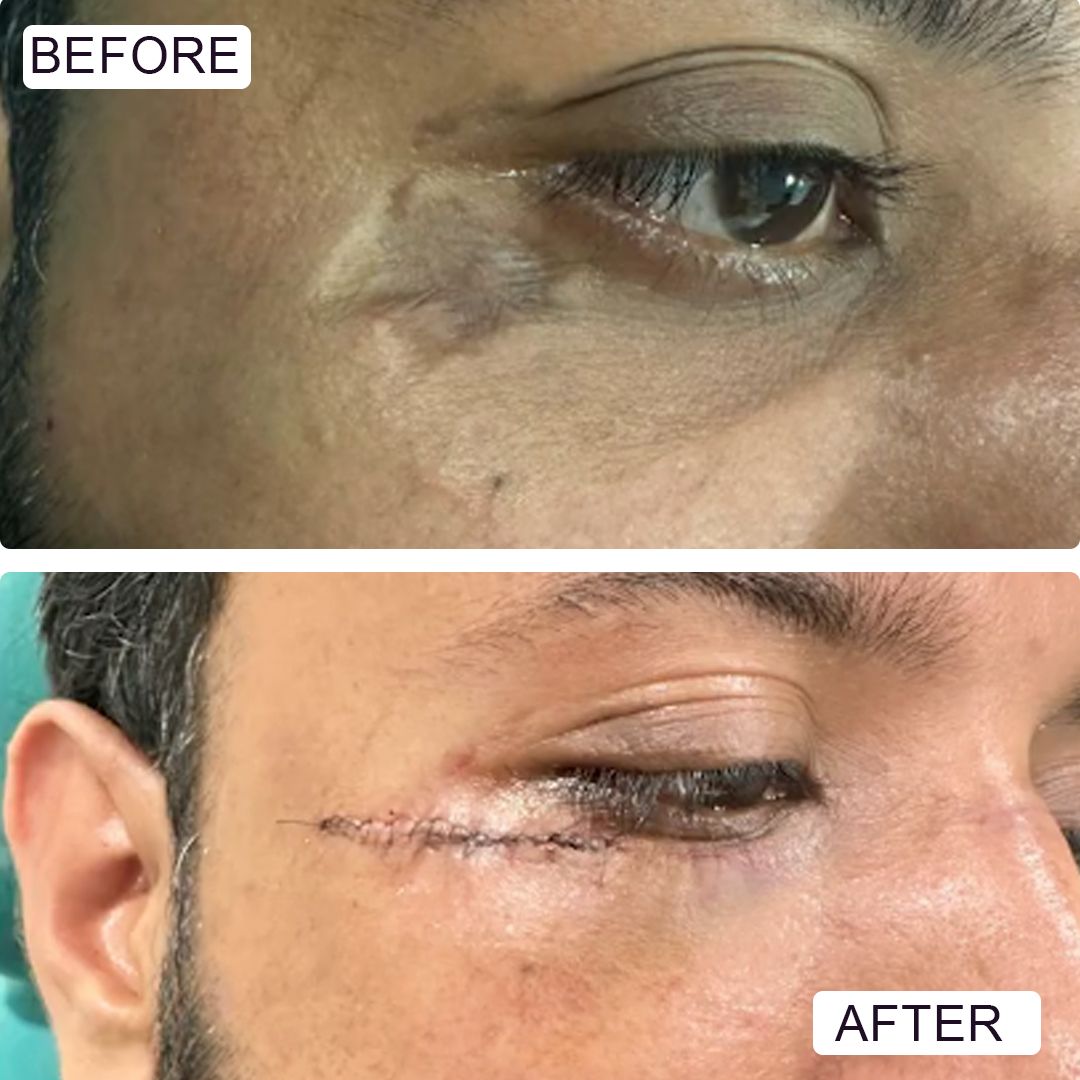
Scar Revision is a specialised procedure used to improve the appearance, texture, thickness, or function of scars resulting from injuries, burns, surgeries, infections, or previous reconstructive procedures. Depending on the type and location of the scar, treatment may involve surgical revision, scar release, skin grafting, or flap reconstruction.
Scar Revision Procedures
- Surgical Scar Revision – Removal and careful re-closure of selected scars to create a more favourable scar.
- Hypertrophic Scar Revision – Management of raised and thickened scars that may cause discomfort or cosmetic concerns.
- Contracture Release – Release of tight scar tissue that restricts movement or causes functional limitation.
- Burn Scar Reconstruction – Reconstruction of restrictive or extensive scars following burn injuries.
- Post-Traumatic Scar Revision – Improvement of scars resulting from accidents, lacerations, or other injuries.
- Post-Surgical Scar Revision – Correction of problematic scars following previous surgical procedures.
- Skin Grafting – Use of healthy skin to cover selected defects created after scar release or scar removal.
- Local Flap Reconstruction – Use of nearby healthy tissue to reconstruct defects following scar excision or contracture release.
- Z-Plasty & Scar Reorientation – Surgical techniques used in selected scars to improve alignment and release tension.
- Complex Scar Reconstruction – Advanced reconstruction for extensive scars involving significant tissue distortion or functional impairment.
Common Causes
- Surgical procedures
- Road traffic accidents
- Traumatic injuries
- Burns
- Infections
- Skin and soft tissue injuries
- Previous reconstructive surgery
- Wound healing complications
- Skin graft or flap surgery
When Is Scar Revision Considered?
Scar revision may be considered when a scar is raised, widened, painful, restrictive, cosmetically prominent, or interferes with normal movement or function.
The treatment approach depends on:
- Type and maturity of the scar
- Size and location
- Scar thickness and direction
- Degree of contracture
- Effect on movement or function
- Condition of surrounding skin
- Previous treatments or surgeries
- Overall health and healing capacity
Congenital Defect Reconstruction
Specialised Reconstruction to Improve Form, Function, and Development in Congenital Conditions
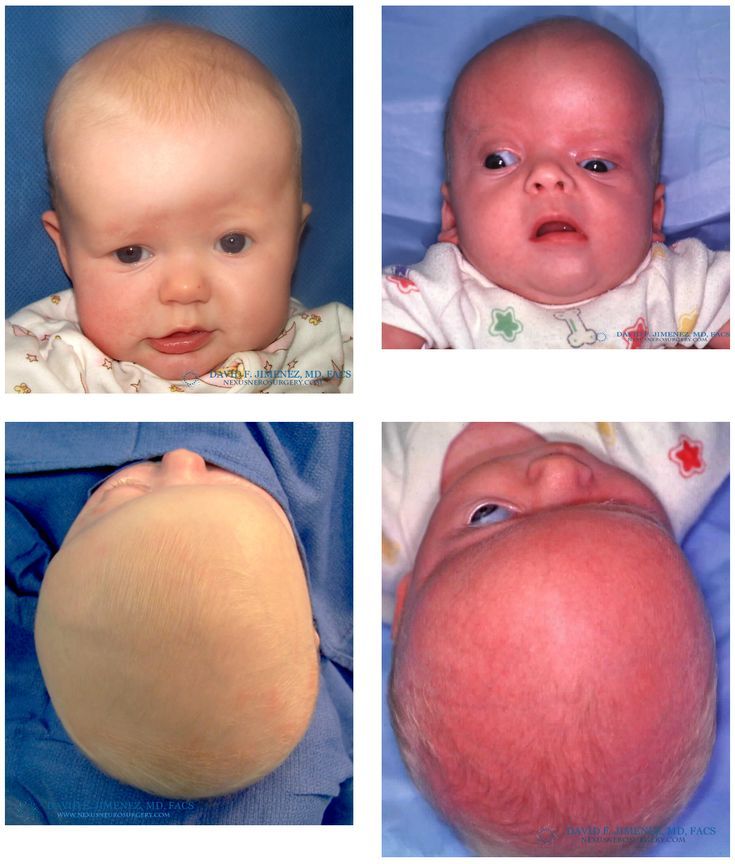
Congenital Defect Reconstruction is a specialised surgical approach used to correct or reconstruct body parts affected by conditions present at birth. These conditions may involve the face, hands, limbs, skin, soft tissues, or other structures. Reconstruction aims to improve function, support normal development, and achieve a balanced and natural appearance.
Congenital Reconstruction Procedures
- Cleft Lip Reconstruction – Surgical correction of cleft lip to improve feeding, speech development, facial symmetry, and appearance.
- Cleft Palate Reconstruction – Repair of cleft palate to support normal feeding, speech, and oral function.
- Congenital Hand Reconstruction – Correction of selected congenital hand differences affecting movement, growth, or function.
- Syndactyly Release – Separation of joined fingers or toes to improve movement and function.
- Polydactyly Correction – Surgical correction of extra fingers or toes when appropriate.
- Congenital Limb Reconstruction – Reconstruction of selected limb abnormalities affecting function or development.
- Congenital Ear Reconstruction – Correction or reconstruction of congenital ear deformities to improve shape and symmetry.
- Congenital Facial Reconstruction – Reconstruction of facial differences affecting appearance or function.
- Congenital Skin & Soft Tissue Reconstruction – Management of selected birth-related defects involving skin and underlying soft tissues.
- Scar & Contracture Correction – Release and reconstruction of congenital or early-life restrictive tissue abnormalities.
- Soft Tissue Flap Reconstruction – Use of healthy tissue to provide coverage and restore contour in selected congenital defects.
Common Congenital Conditions
- Cleft lip and cleft palate
- Syndactyly
- Polydactyly
- Congenital hand differences
- Congenital limb differences
- Congenital ear deformities
- Facial developmental abnormalities
- Congenital skin and soft tissue defects
- Congenital contractures
- Other structural abnormalities present at birth
When Is Congenital Reconstruction Considered?
Reconstructive surgery may be considered when a congenital condition affects function, normal development, mobility, feeding, speech, appearance, or quality of life. The timing of surgery varies according to the specific condition and the child’s age and development.
The treatment plan depends on:
- Type and severity of the congenital defect
- Age and stage of development
- Functional limitations
- Anatomical structures involved
- Growth and development considerations
- Overall health of the child
- Expected functional and reconstructive goals
Genital Reconstruction
Specialised Reconstruction to Restore Genital Form, Function, and Tissue Integrity
Genital Reconstruction is a specialised surgical approach used to restore or reconstruct genital tissues affected by congenital conditions, trauma, cancer surgery, infection, burns, or significant tissue loss. Depending on the condition, reconstruction may involve skin, soft tissue, urethral structures, or other anatomical tissues, with the goal of achieving functional and durable reconstruction.
Genital Reconstruction Procedures
- Genital Soft Tissue Reconstruction – Restoration of damaged or missing skin and soft tissue following trauma, infection, or tissue loss.
- Genital Skin Grafting – Coverage of suitable tissue defects using healthy skin from another part of the body.
- Local Flap Reconstruction – Use of nearby healthy tissue to reconstruct selected genital defects.
- Regional Flap Reconstruction – Transfer of tissue from an adjacent region for larger or deeper defects.
- Scar & Contracture Release – Correction of restrictive scar tissue affecting genital movement or function.
- Post-Trauma Reconstruction – Reconstruction following accidental or traumatic genital injuries.
- Post-Cancer Reconstruction – Restoration of tissue following removal of genital or surrounding cancers.
- Post-Infection Reconstruction – Reconstruction following severe infections and resulting tissue loss.
- Congenital Defect Reconstruction – Correction of selected congenital genital abnormalities when reconstruction is appropriate.
- Complex Genital Reconstruction – Advanced reconstruction for extensive tissue loss or defects involving multiple anatomical structures.
Common Causes
- Traumatic injuries
- Road traffic accidents
- Industrial and workplace injuries
- Severe infections
- Burns
- Cancer surgery
- Congenital abnormalities
- Surgical complications
- Significant skin and soft tissue loss
When Is Genital Reconstruction Considered?
Reconstructive surgery may be considered when genital injury or disease causes significant tissue loss, scarring, deformity, functional problems, or difficulty with normal anatomical function.
The treatment plan depends on:
- Type and extent of tissue damage
- Location and depth of the defect
- Condition of surrounding tissues
- Blood supply to the affected area
- Presence of infection
- Involvement of deeper structures
- Previous surgery or treatment
- Overall health and healing capacity of the patient